Bone Truths
Shining a light on dental implants
For too long, patients have been kept in the dark about what goes into their mouths. The Bone Truths campaign marks a turning point - giving people the power to make choices that honour their religious, ethical and personal beliefs.
of patients would have requested a synthetic or man-made material if informed their graft was animal or human-derived.
of patients would not have requested a synthetic or man-made material if informed their graft was animal or human-derived.
UNDERSTANDING YOUR IMPLANT TREATMENT AND BONE GRAFTING
A dental bone graft replaces missing or lost bone in your jaw. Dentists commonly place bone grafts prior to dental implant surgery or when bone loss negatively affects your oral health.
But not all patients understand what's actually in a bone graft.
This short video captures real reactions from members of the public learning the truth...
WHY YOU MIGHT NEED A BONE GRAFT
Bone loss in the jaw can occur due to various reasons, including:
Tooth extraction
Gum disease

Injury or trauma
UNDERSTANDING GRAFT MATERIAL SOURCES
Bone graft materials include:
Autograft
Bone taken from your own body.
Allograft
Bone from a deceased human.
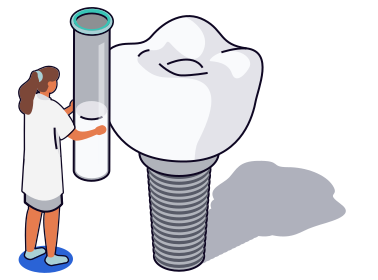
Synthetic
Lab-made materials designed to mimic natural bone.
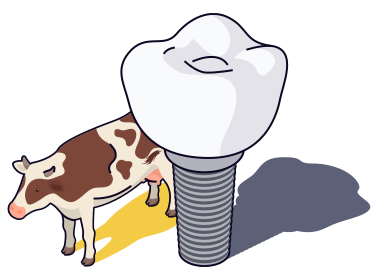
Xenograft
Bone from an animal source.
Many patients prefer synthetic graft materials to avoid ethical concerns associated with animal-derived products. Discussing these preferences with your dentist ensures that your values are respected.
78% of vegan patients would have asked for alternatives if they had been told their bone graft was going to be made from animal or deceased human.
Among Hindu patients, 63% would request synthetic material; 38% would refuse animal or human bone.
67% of Sikh patients would request synthetic material.
Myth or Truth
THE ROLE OF SYNTHETIC (ANIMAL-FREE) BONE GRAFTS
Synthetic bone graft materials embrace diversity and are suitable for patients across all beliefs and lifestyles
Synthetic bone grafts are fully man-made and contain no animal or human tissue.
They are typically made from medical-grade minerals similar to natural bone and are optimal for bone regeneration, such as:
Key features:
- Vegan-friendly
- No animal or human tissue
- Widely used and trusted across a variety of medical procedures
- Can act as a scaffold for your own bone to grow into (depending on type)
- May gradually resorb and be replaced by natural bone (depending on type)
MAKING AN INFORMED DECISION
Consider your lifestyle needs, ethical beliefs, and the information provided to choose the bone graft material that aligns with your values.







DECODING YOUR TREATMENT
Dental professionals often use baffling clinical terms that aren’t explained in everyday language – but what do they actually mean?
42% of patients did not understand the terminology used for grafts (Bone Truths research, May 2025)
If they say:
“Xenograft”
- This means a bone graft material that comes from an animal source (most commonly cow or pig).
- These materials are specially processed and sterilised for medical use
- They do not contain living animal tissue
- They may raise concerns for patients with religious, vegan, or ethical preferences
You can ask:
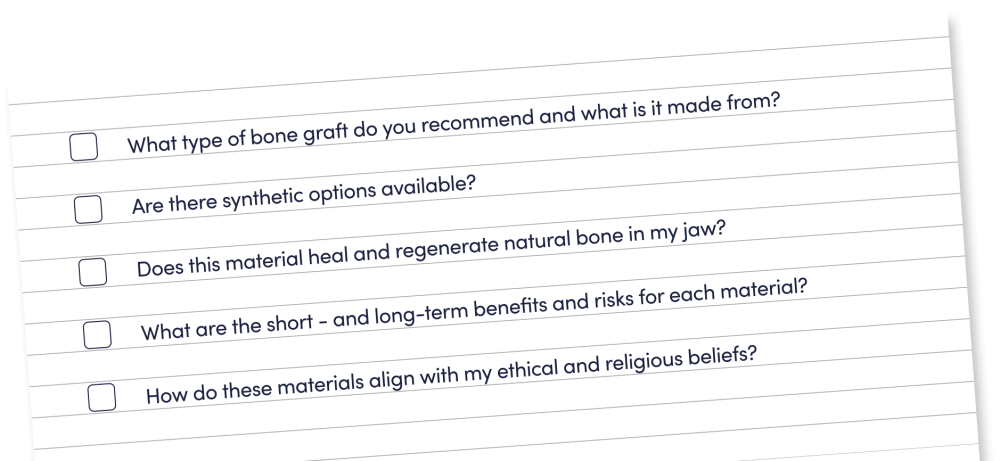
Is this material animal-derived, and are synthetic alternatives suitable for me?
“Collagen membrane” or “membrane”
- This usually refers to a thin protective layer placed over a bone graft to support healing.
- Most collagen membranes are made from animal-derived collagen (often porcine)
- They help guide bone regeneration and prevent soft tissue from growing into the area.
You can ask:
What is this membrane made from, and are there non-membrane alternatives?
“Bone substitute”
- This is a general term for a material used to replace or support missing bone.
- It can mean animal-derived, human donor, or fully synthetic material.
- The term alone does not tell you the origin.
You can ask:
Is this substitute animal-derived, human-derived, or synthetic?
“Allograft”
- This refers to a graft made from deceased human bone.
- The bone is processed and sterilised
- Some patients prefer to avoid human donor materials for personal or religious reasons
You can ask:
Are there synthetic alternatives available?
"Autograft”
- This means the bone used for grafting comes from your own body.
- The bone is usually taken from another area in your mouth (or occasionally elsewhere).
- Because it is your own tissue, it is often described as the “gold standard” in bone grafting.
- No animal or donor materials are involved.
Things to be aware of:
- It may require a second surgical site
- This can sometimes mean more healing time or discomfort
- Not all patients need or are suitable for an autograft
You can ask:
Is an autograft necessary in my case, or could a synthetic option work instead?
“Guided bone regeneration (GBR)”
- This describes the technique, not the material.
- It means bone is encouraged to grow in a controlled way.
- GBR often involves both a graft material and a membrane.
- Materials used can vary in origin.
You can ask:
What materials will be used during this process?
“Resorbable”
- This means the material is designed to gradually break down as your own bone heals.
- Many grafts and membranes are resorbable.
- Resorbable does not automatically mean synthetic or animal-free.
You can ask:
What is this resorbable material made from?
LIFESTYLE AND RELIGIOUS CONSIDERATIONS
- Most synthetic grafts are compatible with vegan principles
- They may also be acceptable for patients with Islamic, Jewish, Hindu, Buddhist, or other religious beliefs that restrict animal products
- Medical devices are not always formally certified as halal or kosher
- Patients are encouraged to consult their religious authority if desired
- For many patients, their personal values lead them to choosing an option that avoids animal and/or human materials


IMPORTANT TO KNOW
- Not every graft is suitable for every clinical situation
- In some complex cases, your clinician may explain benefits and limitations of different materials
- Your beliefs and values are an important part of treatment planning
YOUR CHOICE MATTERS
Please tell your dentist or surgeon if you:
- Follow a vegan lifestyle
- Have religious or ethical concerns
- Want to avoid animal-derived or human-derived materials
LEARN MORE ABOUT BONE GRAFTING
Resources
Are Synthetic Dental Bone Grafts Painful?
Are dental bone grafts painful? Learn how synthetic bone grafts can reduce discomfort, speed recovery, and support successful dental implants. Understand the procedure, recovery process, and why many patients experience…

Top 10 Questions to Ask Your Dentist About Dental Implants
Thinking about dental implants? Before starting treatment, it's important to ask the right questions. From costs and recovery times to bone grafting, sedation, success rates, and long-term maintenance, this guide…
Are Dental Implants Safe?
Are dental implants safe? Learn about implant materials, success rates, bone grafts, and modern technology that make dental implants a safe choice.
Am I Missing Too Much Bone for Dental Implants?
Concerned about dental bone loss? Discover how bone grafting and modern implant dentistry can rebuild jawbone support for dental implants.
The Patient's Guide to Dental Implant & Bone Graft Preparation - Pre Surgical